 Image 1 of 1
Book release and fulfillment is expected in May, 2026.
It is a hot night in July. The year is immaterial: sometime in the early days of the twentieth century. Downtown the street is dark except for the occasional oil streetlights and the creak of wagon wheels as they bump across holes in the business district. Curb sitters carry on their arguments.
But in the park, things are different. Seated on the grass and on the park benches assembled facing the band stand are men and women, women in bustles and men in arm bands to hold their sleeves above their hands. Children play in the grass.
The bandstand is a blaze of lights. Seated in a semicircle are the members of the Town band. They are wearing stiff, hot jackets, buttoned closely in the front, and surmounted by a close-fitting collar. On their heads, they wear hats like those the trolley car conductor wears. Their pants are the same color as their coats, without a doubt black. There is a stripe of gray running down each trouser leg. Ah, there were the days.
And so was the story in town after town, city after city, and municipality after municipality in Oklahoma in the latter part of the 1800s and into the first half of the new 20th century. The Land Run of 1889 marked a significant change in the development of the Indian Territory as settlers flocked to what would soon clamor for statehood. Wagons transported goods as settlements and towns sprang up or grew with the influx. Town governments, councils, and business groups quickly vied for control and established norms. Lawmen were appointed, schools opened, and commerce brought a measure of urbanization. The 1893 World’s Fair rang the bell of modernization, and Oklahoma’s communities answered the call, racing to become more cosmopolitan and attract more business and citizens.
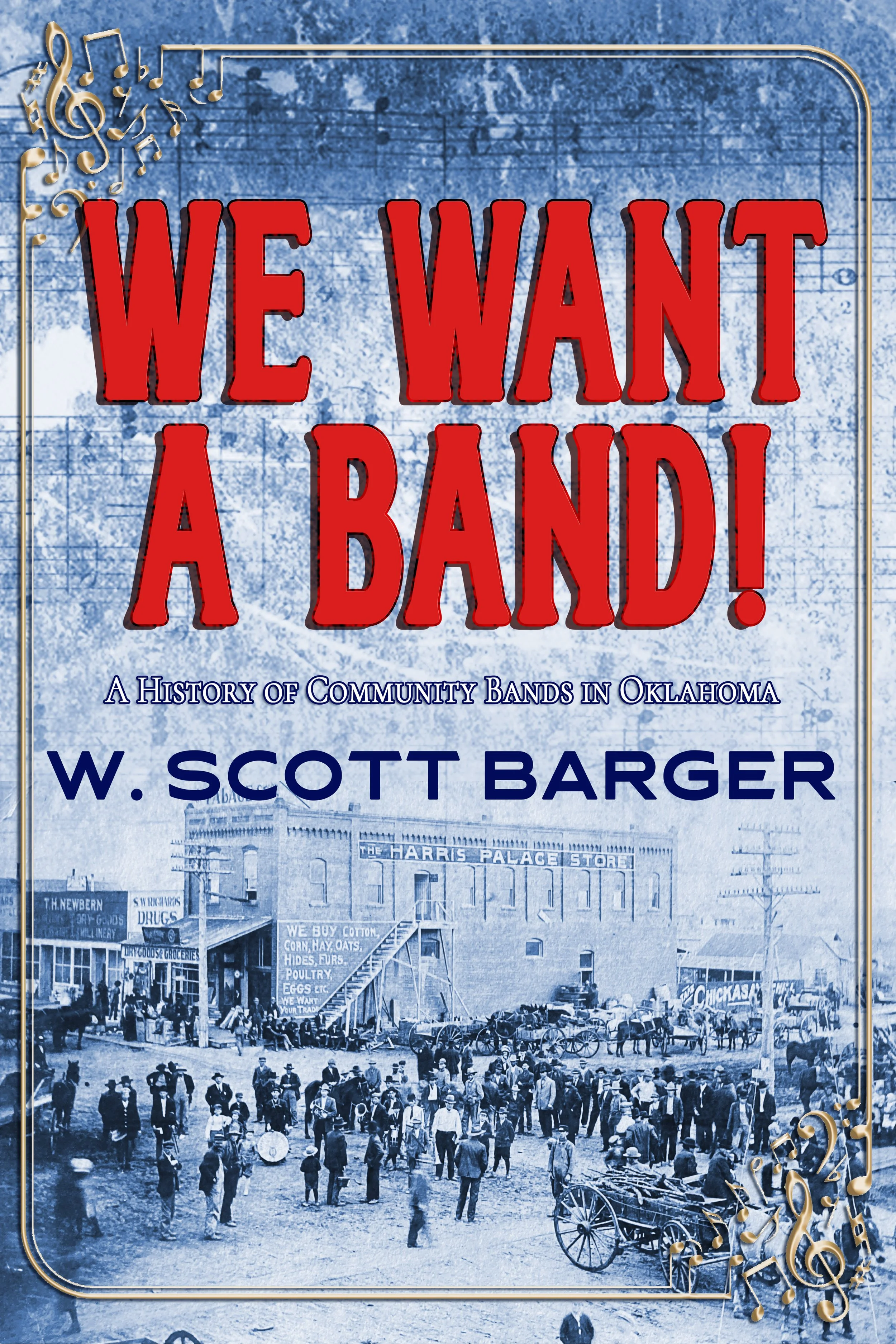
We Want a Band is the story of Oklahoma’s early musical development.
It is a hot night in July. The year is immaterial: sometime in the early days of the twentieth century. Downtown the street is dark except for the occasional oil streetlights and the creak of wagon wheels as they bump across holes in the business district. Curb sitters carry on their arguments.
But in the park, things are different. Seated on the grass and on the park benches assembled facing the band stand are men and women, women in bustles and men in arm bands to hold their sleeves above their hands. Children play in the grass.
The bandstand is a blaze of lights. Seated in a semicircle are the members of the Town band. They are wearing stiff, hot jackets, buttoned closely in the front, and surmounted by a close-fitting collar. On their heads, they wear hats like those the trolley car conductor wears. Their pants are the same color as their coats, without a doubt black. There is a stripe of gray running down each trouser leg. Ah, there were the days.
And so was the story in town after town, city after city, and municipality after municipality in Oklahoma in the latter part of the 1800s and into the first half of the new 20th century. The Land Run of 1889 marked a significant change in the development of the Indian Territory as settlers flocked to what would soon clamor for statehood. Wagons transported goods as settlements and towns sprang up or grew with the influx. Town governments, councils, and business groups quickly vied for control and established norms. Lawmen were appointed, schools opened, and commerce brought a measure of urbanization. The 1893 World’s Fair rang the bell of modernization, and Oklahoma’s communities answered the call, racing to become more cosmopolitan and attract more business and citizens.
We Want a Band is the story of Oklahoma’s early musical development.
Book release and fulfillment is expected in May, 2026.